
Understand the principle
Review how controlled elevation, orientation, accumulation and release work together.
Engineering questions answered
This resource answers common engineering and purchasing questions about industrial step feeding. Every final configuration remains application-specific and should be confirmed with representative components and an agreed acceptance test.
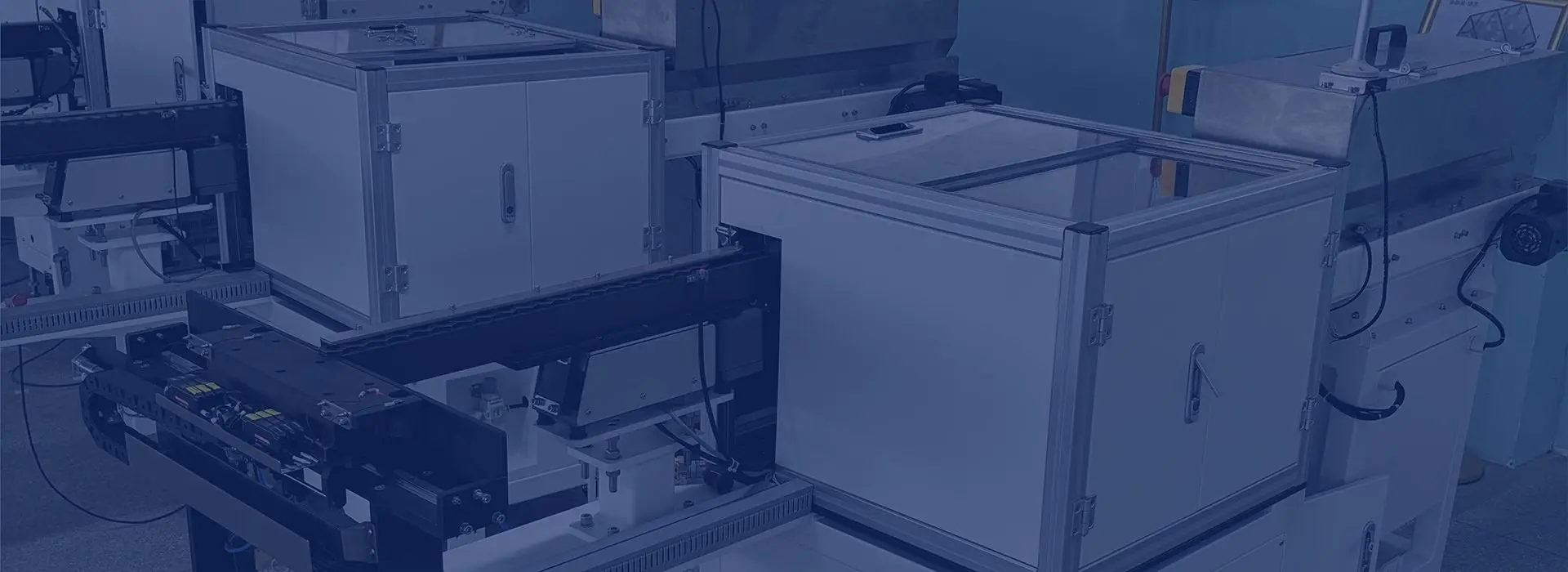
Representative production equipment; final feed path and guarding are application-specific.
Core definition
A step feeder is a component-handling system that uses reciprocating plates or steps to lift parts progressively from a bulk hopper. Parts then transfer to a rail or linear track for orientation, accumulation and controlled release.
Application fit
Useful candidates include larger, longer, heavier, oily, tangled or noise-sensitive parts, but suitability cannot be decided from category alone. Geometry, bulk behaviour, rate and final orientation must be tested together.
Review how controlled elevation, orientation, accumulation and release work together.
Check when step feeding, vibratory bowls or other presentation principles should be trialled.
Use the selection checklist so suppliers evaluate the same component and production conditions.
Separate base equipment from tooling, controls, guarding, trials and integration responsibilities.
Specify the exact datum, pitch, signal sequence and downstream demand at the hand-off.
Agree samples, trial duration, accepted output, intervention rules and FAT evidence early.
Project route
Send a current drawing or clear photographs, representative samples, all variants, required hand-off, sustained accepted rate, available layout and receiving-machine details. This supports a focused application review.
Straight answers
A step feeder progressively lifts components from a bulk hopper, then transfers them to tooling that orients, buffers and releases accepted parts to a machine.
Reciprocating plates rise through the component bed. Suitable parts reach the upper transfer while unsuitable presentations return to the hopper for another cycle.
Applications can include bolts, screws, pins, shafts, nuts, bushes, clips, mouldings, closures and other components. Feasibility depends on the specific geometry and bulk condition.
They can reduce continuous vibratory bulk motion, but total noise also comes from component impacts, tracks, pneumatics and downstream equipment. Measure the complete system under production conditions.
They are often considered for long, heavy or bulky parts. Step size, drive, hopper structure and transfer geometry must be engineered for the component.
Potentially. Long parts, springs or clips may interlock, so realistic bulk samples and bed depth are essential during trials.
A defined family may use adjustable tooling, recipes or change parts. Every variant and changeover condition must be validated.
There is no universal rate. Accepted output depends on part behaviour, orientation, lanes, buffer and release. Specify sustained accepted parts per minute and prove it by trial.
Most automated hand-offs need a device or controlled nest that isolates one part at the required pitch and position. Confirm the supply boundary in the quotation.
Yes. The track or nest must provide repeatable position, separation, access and sensing, with a defined ready/demand/fault handshake.
Capacity is selected from component weight, desired refill interval, loading method, bed-depth behaviour and structural limits, not volume alone.
Sensors monitor demand and track state; a PLC coordinates lifting, orientation devices, escapement, alarms, guarding and upstream or downstream handshakes.
Cost depends on components, tooling, rate, variants, hopper, release, controls, guarding, trials and integration. A useful quotation needs a defined application brief.
Samples reveal friction, bounce, nesting, oil, burrs and variation that drawings may not show, allowing the feed path and acceptance test to be based on evidence.
Agree sample mix, duration, accepted rate, orientation quality, permitted interventions, changeover, fault recovery and the evidence to be recorded.
The machine-specific schedule typically covers cleaning, sensor condition, guide and rail geometry, step alignment, escapement wear, air condition, guarding and controlled change parts.
Application review
Send representative components, drawings, required orientation, sustained output and receiving-machine details. Sortation Solutions will review the feed path and recommend the next engineering step.