
Part-to-part contact
Metal fasteners and hard mouldings can create impact noise wherever bulk components settle or recirculate.
Noise-conscious component handling
Step-lifting systems can reduce continuous vibratory-bowl noise while maintaining a low loading height and controlled route to the production line.
Understand the source
The feeder mechanism matters, but part material, quantity, drop height, track design, frame resonance and enclosure details also change the result.
Metal fasteners and hard mouldings can create impact noise wherever bulk components settle or recirculate.
Uncontrolled falls between the hopper, step, track and return path can dominate the perceived sound.
Frames, panels and covers require isolation and stiffness so they do not amplify mechanical movement.
Higher movement frequency and a larger component bed can increase collisions and overall sound energy.
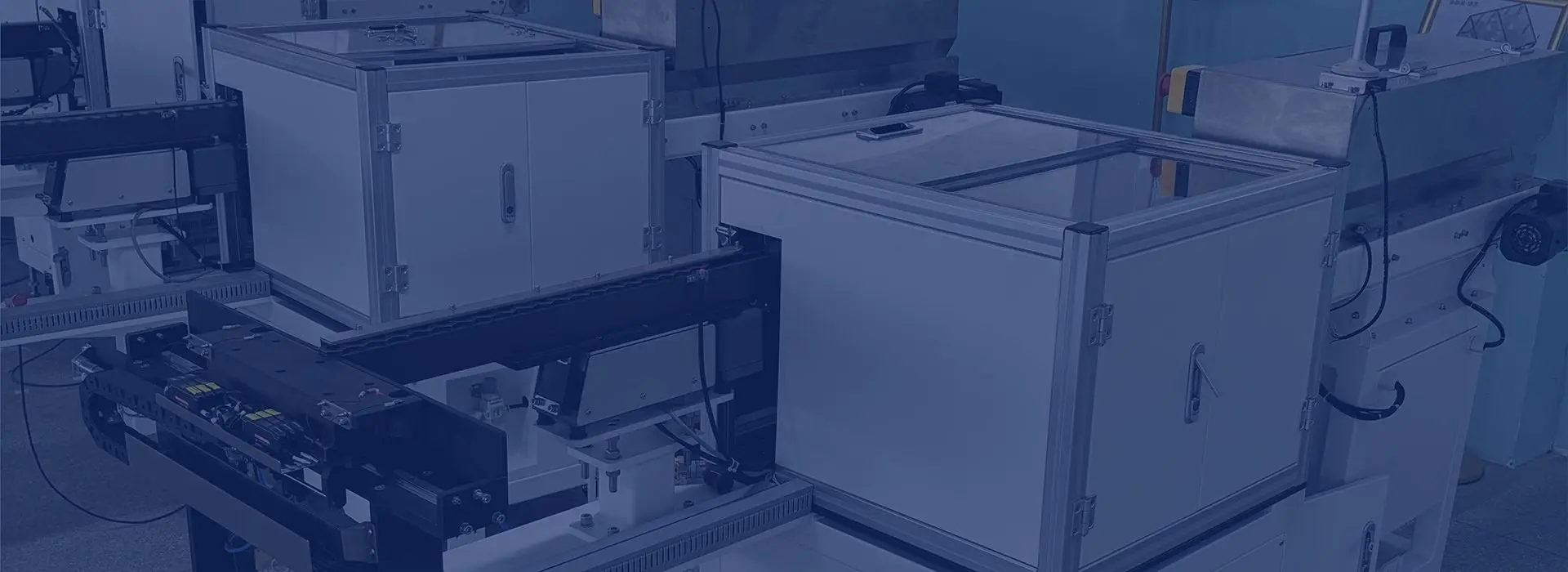
Covers can support noise control while also managing access, observation and guarding.
Design measures
A quieter feed path is developed by reducing avoidable impact and preventing the structure from turning small impulses into a larger acoustic problem.
Proving performance
A bare claim such as “low noise” is not an acceptance test. Define the production condition and the measurement method before manufacture.
Material, component quantity, finish and normal production variation.
Required sustained rate, hopper fill and downstream demand.
Position, distance, operating period and background condition.
Sound reading, accepted output and permitted intervention together.
Straight answers
No industrial feeder is silent. A step feeder can remove the continuous resonant action of a vibratory bowl, but impact between parts, movement on tracks, drives and the surrounding machine all contribute to the measured sound level.
A meaningful sound target requires an agreed measurement method, operating rate, component quantity, microphone position and background condition. Trials provide the basis for deciding whether covers, liners or further acoustic treatment are needed.
Suitable liners can reduce metal-on-metal or hard-plastic impact, but they may change friction, cleanliness, wear and orientation behaviour. The material must be selected and tested as part of the feeding process.
Yes. Acoustic covers can be integrated with access doors, interlocks, observation panels and service clearance, subject to the final safety and maintenance assessment.
Application review
Send a drawing or photograph, the component range, required orientation, sustained output and receiving-machine details. We will identify the most suitable next step.
Step feeder knowledge centre
Compare principles, define the application and arrive at a quotation or trial with the evidence needed for a useful answer.
Compare feeding principles by component, noise, rate and hand-off.
Read the guide →Engineering guidance for bolts, screws, pins, nuts, bushes and shafts.
Read the guide →Understand lower-vibration bulk feeding and realistic noise objectives.
Read the guide →Build a complete brief from components, rate, layout and acceptance evidence.
Read the guide →See which tooling, controls, guarding and integration choices determine scope.
Read the guide →Define the verified datum, buffer and one-part machine release.
Read the guide →Protect feed-path geometry, sensing, alignment and fault recovery.
Read the guide →Get direct answers to common engineering and purchasing questions.
Read the guide →