
Component size and weight
Step feeding is frequently evaluated for long, heavy or bulky components because parts are elevated in controlled layers.
Feeder selection comparison
A step feeder is often considered when components are larger, heavier, oily, tangled or noise-sensitive. A vibratory bowl may remain the better answer for compact parts, complex tooling or established high-rate applications. The correct choice is proven against samples and the required hand-off.
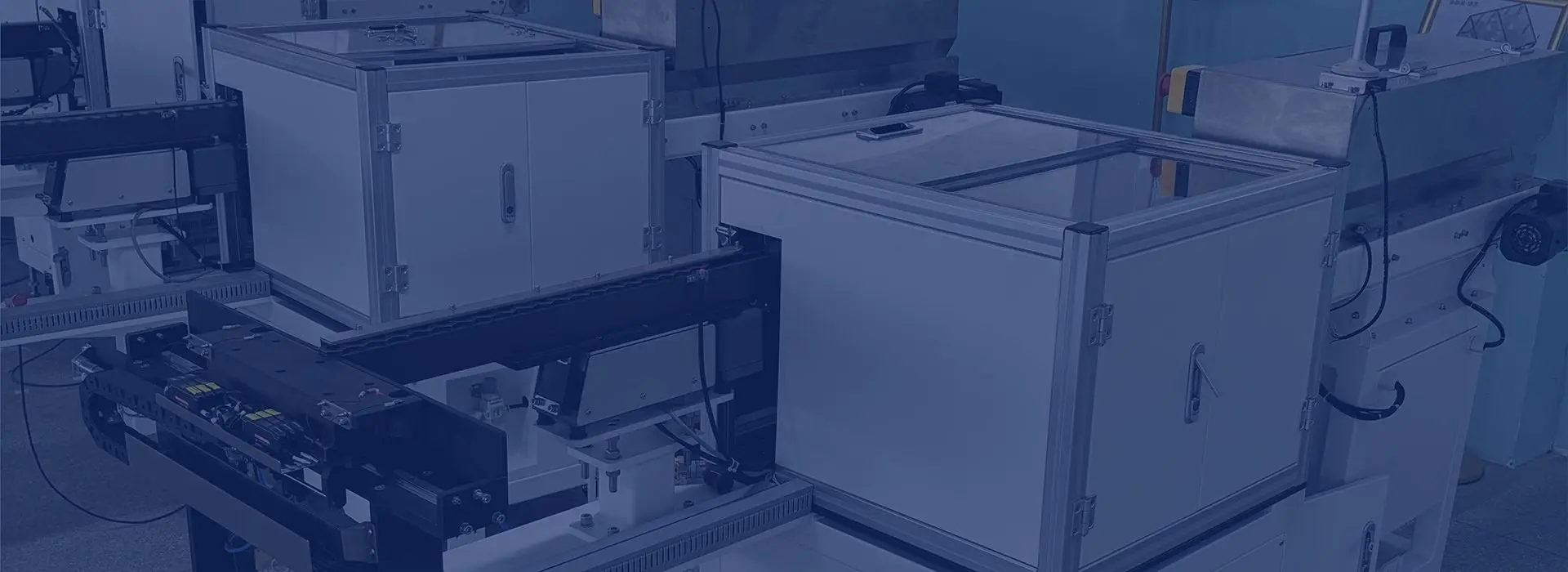
Representative production equipment; final feed path and guarding are application-specific.
Direct answer
A step feeder lifts parts progressively from a low-level hopper and normally completes orientation on a rail or linear track. A vibratory bowl uses controlled vibration to move components around a tooled circular track. Neither principle is universally better: component behaviour, accepted output, noise, footprint and downstream presentation determine the result.
Side-by-side assessment
The orientation track, buffer, inspection and escapement can be as important as the bulk-feeding principle. Use the comparison as a shortlist, then confirm the decision by trial.
Step feeding is frequently evaluated for long, heavy or bulky components because parts are elevated in controlled layers.
Separating lifting from final orientation can help reduce continuous bowl vibration, although total system noise still requires measurement.
A bowl can offer extensive circular tooling. A step feeder normally relies on a transfer rail, guides, sensors or vision after elevation.
Low-level hoppers can improve manual loading and keep bulk storage away from the final presentation point.
Part families may use adjustable guides or change parts, but the real changeover time must include tooling, controls and validation.
Specify sustained accepted parts per minute, buffer time and refill interval. Peak cycling speed alone is not a production rate.
Decision evidence
Representative parts reveal nesting, friction, bounce, oil, burrs and dimensional variation that drawings cannot fully predict. A useful trial measures sustained accepted output at the specified hand-off, not only movement inside the feeder.
Straight answers
They can reduce continuous vibratory movement, but the complete system includes falling parts, tracks, escapements and guarding. Noise should be assessed using representative parts at the intended rate.
Step feeders are often shortlisted for heavy or large parts because lifting is progressive and the hopper can be loaded at a low level. A trial is still required to confirm stable separation and transfer.
Sometimes. Adjustable rails, recipes and change parts can support a defined family, but every variant must be checked for reliable elevation, orientation and release.
Give every supplier the same samples, accepted orientation, sustained rate, buffer requirement, layout, environment and acceptance test. Compare the full feed path and exclusions, not only the base machine.
Application review
Send representative components, drawings, required orientation, sustained output and receiving-machine details. Sortation Solutions will review the feed path and recommend the next engineering step.