
Long or tangled parts
Bolts, pins, shafts, springs and components that can bridge or interlock in bulk.
Review larger-part feeding →Quiet, controlled component elevation
Low-level, step-lifting parts feeders for larger, longer, heavier or noise-sensitive components—proved with production samples and integrated into your line.
Where step feeding fits
A step feeder is often a strong starting point when a low loading height, reduced continuous vibration or more deliberate handling is important.
Bolts, pins, shafts, springs and components that can bridge or interlock in bulk.
Review larger-part feeding →Robust lifting and controlled transfer for components that merit a substantial feed path.
See component applications →Step-lifting action can reduce the characteristic noise associated with continuous bowl vibration.
Plan quieter feeding →A low-level bulk hopper can provide a practical manual loading height while lifting parts internally.
Understand the system →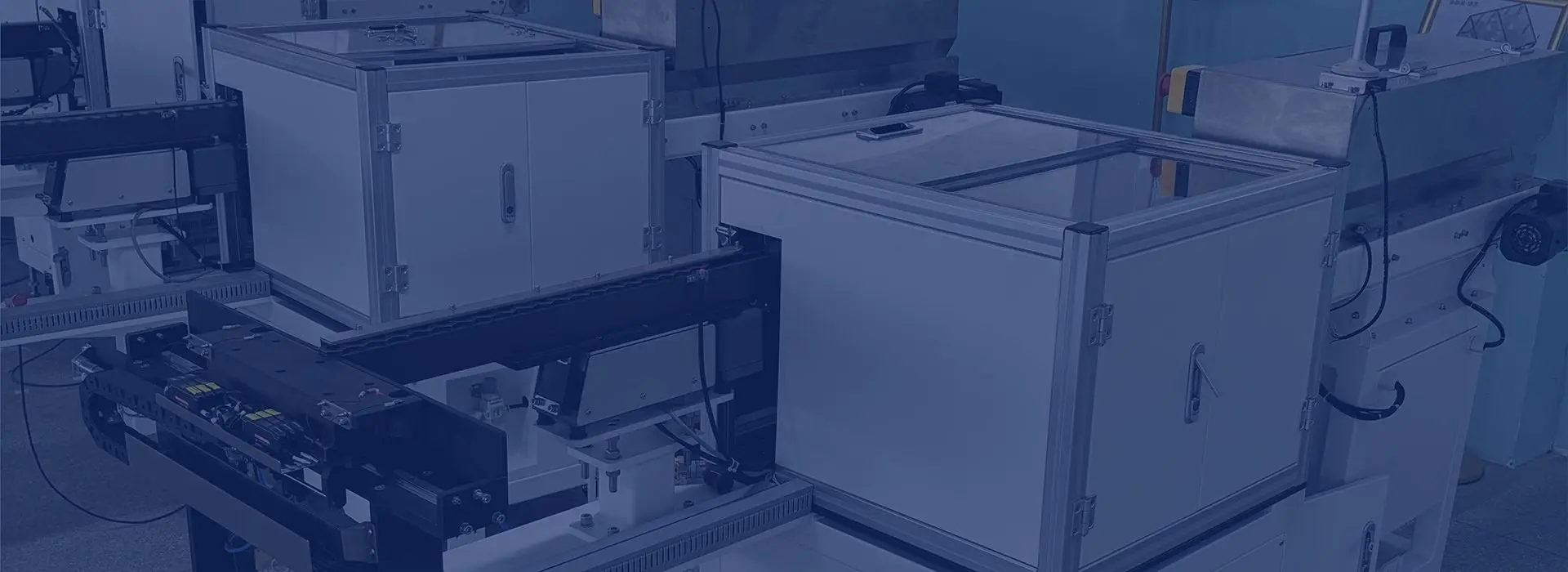
Representative step-feeder technology. Tooling, guarding and layout are engineered to suit the application.
How it works
The mechanism raises a controlled layer of parts in successive steps. Correctly presented components enter the track; others return safely for another cycle.
The feed path
The steps are only one element. Performance is won or lost at the interfaces between bulk storage, elevation, orientation and release.
Low-level hopper, level sensing and refill strategy.
Step width, stroke and bed depth matched to the part.
Rails, track tooling, sensors or vision establish orientation.
Escapement, pitch and machine handshake control delivery.
Production-line integration
Controls, accumulation, changeover, guarding, access and the downstream interface are considered before the mechanical design is fixed.
Technology selection
Neither principle is universally better. The right choice follows the component, output, environment and required orientation.
| Decision point | Step feeder | Vibratory bowl feeder |
|---|---|---|
| Typical handling case | Larger, longer, heavier or entanglement-prone parts. | Broad range of small-to-medium components requiring dedicated orientation. |
| Bulk loading | Low-level hopper can simplify operator loading. | Bowl loading height may require a separate bulk hopper or elevator. |
| Noise character | Intermittent lifting action; part contact still contributes to sound. | Continuous bowl vibration and part movement can be more audible. |
| Orientation | Often completed on a linear rail using tooling or vision. | Frequently completed around the bowl track using dedicated tooling. |
| Proof required | Representative production samples and a defined acceptance test are essential for either method. | |
Define the real requirement
Good information prevents assumptions about rate, orientation and component behaviour.
Straight answers
A step feeder uses reciprocating lifting plates to raise components from a low-level bulk hopper. Parts are progressively presented to a linear track, tooling or vision stage for final orientation and controlled release.
The lifting principle avoids the continuous bowl vibration associated with a traditional vibratory bowl and can be well suited to noise-sensitive areas. Actual sound level still depends on the component, enclosure, frame, speed and part-to-part contact, so it should be evaluated using production samples.
Step feeders are often assessed for larger, longer, heavier, delicate or easily tangled components, including bolts, shafts, pins, mouldings and robust closures. Suitability is determined by how each part lifts, settles, recirculates and enters the orientation track.
The steps meter and elevate the product. Final orientation normally uses rails, track geometry, mechanical tooling, sensors or vision before an escapement releases one component at a time.
Often yes, where the step width and track geometry accommodate the full range. Adjustable guides or change parts may be needed. Every intended variant should be included in trials before the design is fixed.
Send part drawings or photographs, minimum and maximum dimensions, weight, material and finish, all variants, required orientation, sustained rate, available space, loading method and the downstream machine interface.
Application review
Send a drawing or photograph, the component range, required orientation, sustained output and receiving-machine details. We will identify the most suitable next step.
Step feeder knowledge centre
Compare principles, define the application and arrive at a quotation or trial with the evidence needed for a useful answer.
Compare feeding principles by component, noise, rate and hand-off.
Read the guide →Engineering guidance for bolts, screws, pins, nuts, bushes and shafts.
Read the guide →Understand lower-vibration bulk feeding and realistic noise objectives.
Read the guide →Build a complete brief from components, rate, layout and acceptance evidence.
Read the guide →See which tooling, controls, guarding and integration choices determine scope.
Read the guide →Define the verified datum, buffer and one-part machine release.
Read the guide →Protect feed-path geometry, sensing, alignment and fault recovery.
Read the guide →Get direct answers to common engineering and purchasing questions.
Read the guide →Define equipment readiness, usable buffer and a part available at the pickup point as separate conditions. Review startup, a full track and renewed demand before controls are built. The integration guide follows these states through the escapement and receiving-machine confirmation, including a failed pickup or interrupted transfer. This keeps the specification focused on accepted presentations at the assembly station.
A step feeder raises components from the bulk store, but the next process consumes correctly presented parts. Observe where the route loses useful output before assuming that more lifting cycles will solve the production shortfall.
Record the mix of usable orientations, crossed parts and returned components at different hopper levels. Include the actual part-length range. A large quantity reaching the top is not equivalent to a continuous stream that the orientation tooling and receiving station can accept.
Show where unsuitable presentations go and how they re-enter the bulk supply. Check whether repeated recirculation changes the component condition or creates a local build-up. This is particularly relevant when the receiving process is paused but parts remain in the elevation and orientation stages.
State how many accepted parts the receiving station needs during a defined interruption and whether the track can hold them without overlap or damage. Separate bulk autonomy from the usable buffer. A full hopper may still leave the machine waiting if the final presentation queue is empty.
Include refilling, start from empty, a full output track and return to demand in the trial. Record the configuration and accepted delivery at the machine interface. Use those observations to compare the elevation, orientation and release stages instead of quoting only a peak discharge rate.
Plan step-feeder integration — explore the existing guidance